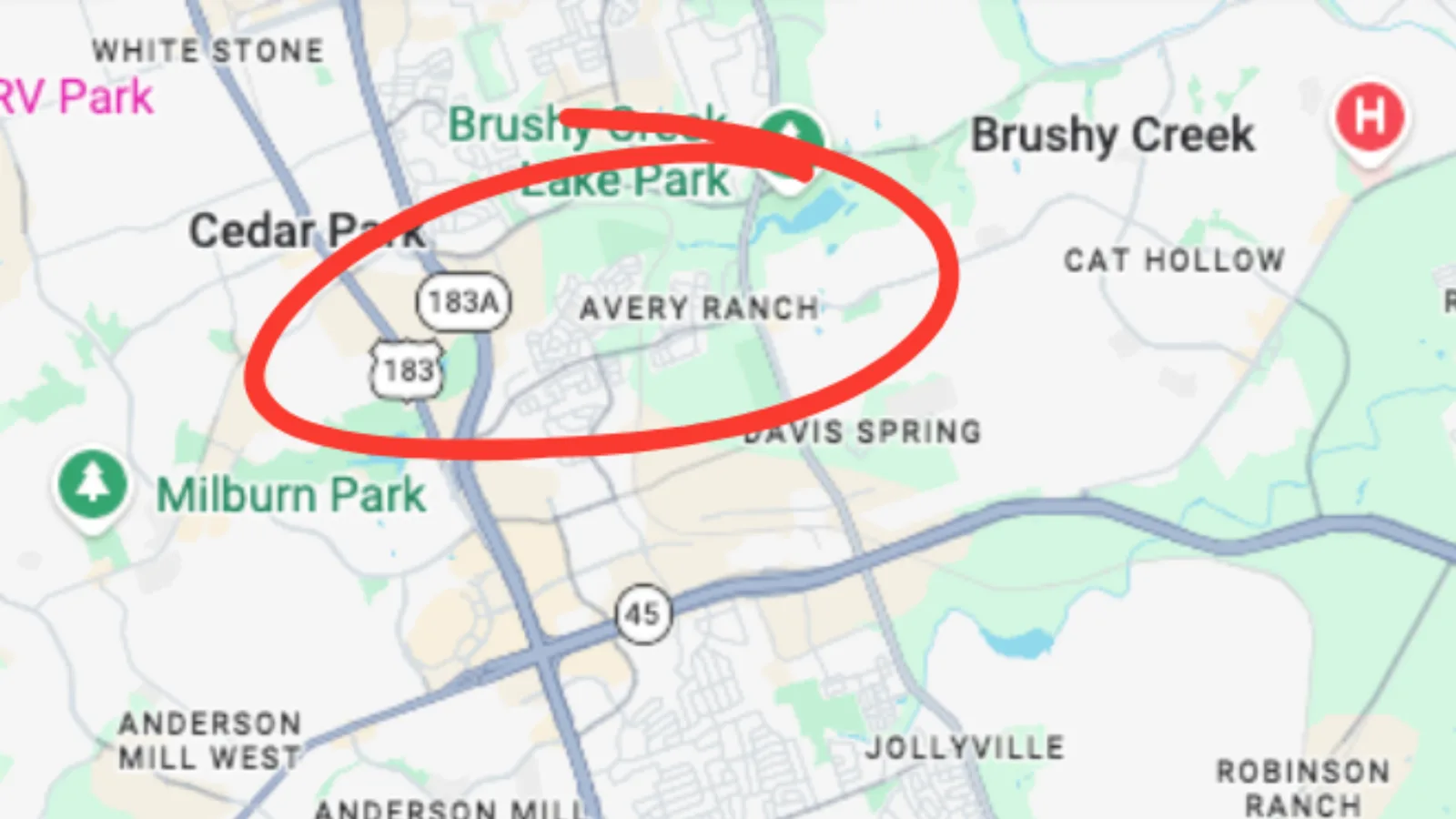
If you live in Avery Ranch, the school tax on your bill this month may not match your neighbor’s. Two homes in the same neighborhood can sit in two different school districts. If you live in Brushy Creek, your bill has a line most people moving here have never heard of: MUD. And this fall, both school districts that serve these neighborhoods are asking voters for a tax increase on November 3.
By the way, my name is April Aguren. I’m a Round Rock and North Austin Realtor®, and every week people reach out to me for help with their next move. If you’d like a private conversation about your next move — and how to avoid the costly mistakes so you make the right decision — book a call with me. No pressure, no pitch. Just a conversation about your next move.
Prefer to watch? This YouTube post goes with my video, https://youtu.be/V5Uca6r_0kE?si=T0jE8x8iIBqpK3Re
Your property tax bill is not one tax. It’s a stack of them. Each group on the bill sets its own rate.
A rate is how many cents you pay for every $100 your home is worth. So a rate of 40 cents on a $400,000 home is $1,600 a year.
Most homes in Avery Ranch and Brushy Creek share the same first three lines:
Then comes one more line, and this is where the two neighborhoods split. Some homes pay a city. Other homes pay a special district instead — a small local government that runs things a city would normally run.
I lived in Avery Ranch for 21 years and sat on its HOA board for 12 of them. If I could hand every buyer one fact before they write an offer, it would be this one: your school district depends on your street, not the neighborhood name.
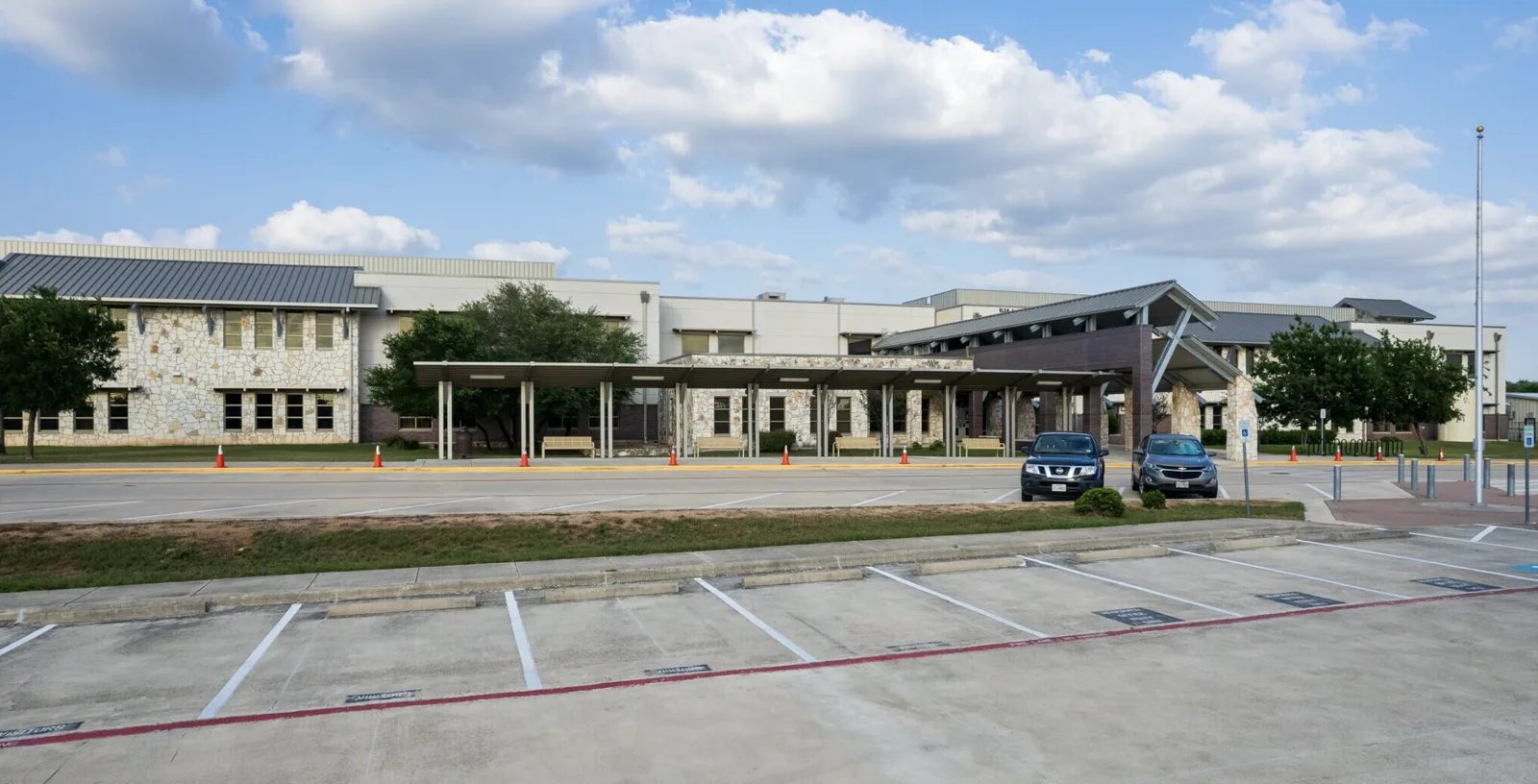
Some Avery Ranch homes are in Round Rock ISD. Others are in Leander ISD. Those two districts charge different tax rates. So two homes at the same price, a few streets apart, can get two different school tax bills. A few homes even sit on the line and get a bill from each district.
There’s one more thing that surprises people. Avery Ranch is inside Austin city limits. A lot of buyers think it’s part of Round Rock or Cedar Park. It isn’t. So your bill carries a City of Austin line, not a Round Rock or Cedar Park line.
How to check your own home: look at your bill, or look up your address on the Williamson Central Appraisal District website, wcad.org. It lists every group that taxes your home by name.
Here’s what surprises a lot of people moving into Brushy Creek. Brushy Creek is not a city. It’s run by the Brushy Creek Municipal Utility District — everyone calls it “the MUD.”
A MUD is a small local government with its own five-person board, elected by the people who live there. In Brushy Creek, it handles water, wastewater, drainage, parks, and trash. The pools, the community center, and the parks along the trail all run through the MUD. So instead of a city line on your bill, you’ll see a MUD line.
This year the MUD’s rate is about 40.7 cents for every $100 your home is worth. Some homes sit in a smaller area inside the MUD called the defined area. Those homes pay about 9 cents more, for roughly 49.7 cents.
For comparison, the City of Round Rock’s rate for this year is 42.3 cents, up from 37.2 cents last year (City of Round Rock, August 2026).
Those numbers are closer than most people expect. A MUD isn’t better or worse than a city. It’s different. What matters is that you know which one you’re buying into.
One more trap: the 78681 zip code also covers homes inside Round Rock city limits. The zip code won’t tell you which one you have. The tax bill will.
I’m not here to tell you how to vote. Some of your neighbors will vote yes and some will vote no. My job is to show you the math so you can decide for yourself.
You’ll see these called a VATRE — a Voter-Approval Tax Rate Election. In plain words: a school district can only raise part of its tax rate so far on its own. To go higher, it has to ask the voters. By law, the ballot has to say “this is a tax increase,” so don’t be surprised when you see those words.
Round Rock ISD is asking for 6 more cents. If voters say yes, the district’s total rate would be about 94.84 cents per $100 (Round Rock ISD, August 2026).
The district says the money goes to staff pay, including a 2% raise across the board and a starting teacher salary of $58,000 a year (Community Impact, August 2026). The vote would raise about $30 million, and roughly half of that goes back to the state. Texas takes back part of the money from districts it considers “property rich.” That’s called recapture.
What 6 cents means for one home — this is my own math, not the district’s. Take a $400,000 home you live in. Your homestead exemption takes $140,000 off the value the school district can tax. That leaves $260,000. Six cents on every $100 of that is about $156 a year, or about $13 a month.
Leander ISD is asking for 3 more cents. If voters say yes, its rate would be about $1.1169 per $100. If voters say no, it goes back to about $1.0869 (Leander ISD, August 2026).
The district uses an average taxable home value of $460,292. For that home, it says the bill would be about $27.56 more a year than last year if the vote passes, or about $110.53 less if it fails (Community Impact, August 2026).
Why such a small increase? Because the district’s rate was already set to go down this year. So the answer depends on what you compare it to: last year’s bill, or this year’s bill without the vote.
If you’re 65 or older and have the over-65 exemption on your home, Texas puts a ceiling on your school taxes. Leander ISD says its vote would not raise school taxes on homes that qualify (Community Impact, August 2026).
That only works if you applied for the exemption with the appraisal district. If you’ve turned 65 and haven’t done that yet, do it before you think about anything else on this list. I’m a Seniors Real Estate Specialist® (SRES®), and this is one of the first things I check with anyone over 65 who’s thinking about a move.
When you know which lines are on your bill, you’re not guessing anymore. You know what you’re buying into before you write an offer.
If you’re thinking about Avery Ranch, my free Moving to Avery Ranch: The Insider’s Guide walks you through all four HOAs, the five amenity centers, and how the schools are split by street. It downloads right on the page.
And if you’d like to talk through your move, book a free 15-minute call with me. No pressure, no pitch.
Sources: City of Round Rock, FY 27 Property Tax Facts (August 2026) · Round Rock ISD, VATRE 26 Prop A announcement (August 2026) · Leander ISD, School Funding Election announcement (August 2026) · Community Impact, Round Rock ISD and Leander ISD tax rate coverage (August 2026) · Brushy Creek MUD 2026 adopted tax rate · Williamson Central Appraisal District, wcad.org. Tax math is approximate and for illustration only. This is general information, not tax or legal advice — check your own bill and talk with a tax professional about your situation.
April Aguren · 20+ Years Real Estate Investor · Realtor® · Seniors Real Estate Specialist® (SRES®) · Hoyden Homes Brokerage · TX License SA848552
Texas Real Estate Commission Information About Brokerage Services | Texas Real Estate Commission Consumer Protection Notice
Book a free 15-minute consultation, no pressure, no obligation.